What is mitochondrial inheritance?
The chromosomes in the body are found in the center of the cells. This is called the nucleus. Outside of the nucleus are mitochondria. These are structures in the cytoplasm (liquid) of the cells. They make energy for the cells. They also contain their own genes that are separate from the ones in the nucleus.
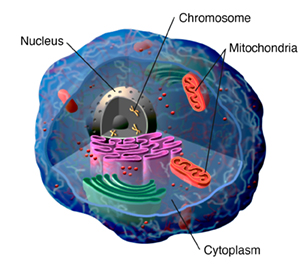
Unlike nuclear genes, which are inherited from both parents, mitochondrial genes are inherited only from the mother. If all of the mother's cells have a mitochondrial mutation (including in her egg cells), she may pass it on to all of her children. Sons will not pass it on, but daughters may pass it on to all of their children. The first human disease that was linked to a mutation in mitochondrial DNA was Leber hereditary optic neuropathy (LHON).
What is Leber hereditary optic neuropathy (LHON)?
LHON causes a painless loss of central vision in both eyes. This is due to the death of optic nerve cells. It leads to blindness in young adults, typically between ages 12 and 30. Both eyes are affected at the same time. Males are about 4 times more likely to be affected than females. Males will not pass the gene to any of their children. But females with the mutation will pass it to all of their children, regardless of whether the children are sons or daughters. Many factors affect the development of LHON. Both alcohol and tobacco use are linked to an increased risk for blindness in carriers of the mutation.
Date Last Reviewed: 08/01/2025
© 2000-2026 The StayWell Company, LLC. All rights reserved. This information is not intended as a substitute for professional medical care. Always follow your healthcare professional's instructions.


Related Articles
X-linked Dominant: Incontinentia Pigmenti
Detailed information on x-linked dominant inheritance.
Autosomal Recessive: Cystic Fibrosis, Sickle Cell Anemia, Tay-Sachs Disease
Overview of autosomal recessive inheritance, including cystic fibrosis, sickle cell anemia, and Tay Sachs disease.
Ocular Histoplasmosis Syndrome
OHS is a disease that can lead to vision loss. It is caused by a fungus. Learn more about the signs and symptoms of OHS, plus how it is treated.
Medical Genetics: Multifactorial Inheritance
Multifactorial inheritance is when more than 1 factor causes a trait or health problem, such as a birth defect or chronic illness. Genes can be 1 factor, but other things that aren't genes can play a part, too.