A coronary calcium scan is a test that looks at the arteries that supply blood to the heart muscle. These are called the coronary arteries. The scan checks for calcified plaque buildup along the walls of these arteries. Plaque can be made up of calcium, fat, cholesterol, and other substances. A buildup of plaque narrows the arteries. This affects the flow of blood to the heart muscle. If a coronary artery becomes completely blocked, a heart attack (death of part of the heart muscle) can occur. Knowing how much plaque you have in your arteries can help figure out your risk for a heart attack.
Why do you need a coronary calcium scan?
A coronary calcium scan measures the amount of calcium in the arteries. The presence of calcium deposits in an artery means that plaque is starting to build up. The results of the test are given as a calcium score. The scan can help predict your risk of having a heart attack, even before symptoms appear.
This scan isn’t for everyone. It's most useful when considered along with other risk factors for a heart attack. These include family history of heart disease, high blood pressure, and unhealthy cholesterol.
What happens during a coronary calcium scan?
The scan is done using computed tomography (CT). This test uses X-rays and computers to create detailed images of the heart.
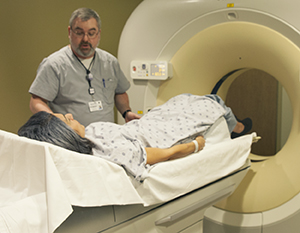
For the test, you lie on a platform that slides into a tube. During the scan:
-
You will need to stay very still.
-
You may be asked to hold your breath for short periods of time.
-
You may have small, sticky discs attached to wires (electrodes) on your chest to record your heartbeat.
The test will likely take about 10 minutes. After the test is done and your appointment is finished, you can go back to your normal routine.
What are the risks of coronary calcium scan?
A CT scan exposes you to a certain amount of radiation. The benefits of the scan likely outweigh the risks for you. You and your health care provider can discuss this further.
Author: Michels, Karen
Online Medical Reviewer: Mahammad Juber MD
Online Medical Reviewer: Raymond Kent Turley BSN MSN RN
Online Medical Reviewer: Raymond Turley Jr PA-C
Date Last Reviewed: 02/01/2025
© 2000-2026 The StayWell Company, LLC. All rights reserved. This information is not intended as a substitute for professional medical care. Always follow your healthcare professional's instructions.

Related Articles
Resting Myocardial Perfusion Scan
Myocardial perfusion is an imaging test. It's also called a nuclear stress test. It is done to show how well blood flows through the heart muscle. It also shows how well the heart muscle is pumping. For example, after a heart attack, it may be done to find areas of damaged heart muscle. This test may be done during rest and while you exercise.
Tests to Diagnose Heart Problems
Here's a look at just a few of the tests used to understand and identify cardiovascular disease.
Understanding coronary computed tomography angiography (CCTA)
CCTA is a type of imaging test that can detect blockages in the arteries of the heart.
Kidney Scan
A kidney scan is an imaging test that looks at your kidneys. Your healthcare provider can also see how well blood is flowing in your kidneys.