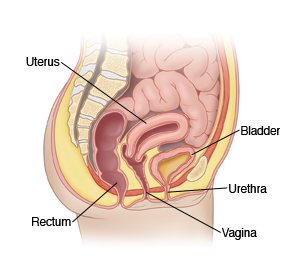
A vaginal tear (laceration) is a wound in the tissues of the vagina. It can be caused by damage during sex. Putting a foreign object into the vagina may also cause a tear. Other factors that can make a tear more likely include thinning of tissue in the vagina due to aging or scarring of the tissue from surgery. An injury in the crotch area during activities such as cycling (straddle injury) can also lead to a vaginal tear.
Treatment depends on how severe your tear is:
-
Shallow (superficial) tears. These may cause mild pain and light bleeding. These tears often heal on their own with very little treatment.
-
Deep tears. These are more likely to cause more severe pain or heavy bleeding. They must be fixed with surgery.
Home care
-
To help ease pain:
-
Use over-the-counter pain medicine as directed. If needed, stronger pain medicines may be prescribed.
-
Soak in a bath with a few inches of warm water. Do this for 10 to 15 minutes a few times a day, or as directed.
-
-
If you lost a lot of blood, you may feel weak. Rest, as needed, until you feel stronger.
-
Don't touch the tear while it is healing.
-
Don’t douche unless your healthcare provider says it’s OK.
-
Wait to use tampons or have sex until the tear has healed. This may take a few weeks or longer. Check with your provider to find out how long to wait before having sex.
-
If the tear was an accidental injury during sex, ask your provider how you might prevent similar injuries in the future. This may include using a water-based lubricant or using a different position during sex.
Follow-up care
Follow up with your healthcare provider, or as advised. If stitches were used to repair your tear, they will dissolve on their own and don’t need to be removed.
When to get medical advice
Call your healthcare provider right away if any of these occur:
-
Bleeding continues or gets worse
-
Pain continues or gets worse
-
Abnormal or bad-smelling discharge from the vagina
-
Fever of 100.4ºF (38ºC) or higher, or as directed by your healthcare provider
-
Dizziness, weakness, or fainting
Featured in
Online Medical Reviewer: Daniel N Sacks MD
Online Medical Reviewer: Donna Freeborn PhD CNM FNP
Online Medical Reviewer: Heather Trevino
Date Last Reviewed: 09/01/2026
© 2000-2026 The StayWell Company, LLC. All rights reserved. This information is not intended as a substitute for professional medical care. Always follow your healthcare professional's instructions.


Related Articles
Self-Care After Episiotomy
Your doctor has either done an episiotomy or repaired tissue that was torn during your baby’s birth. Here you will find suggestions to prevent infection and constipation, and to ease pain.
Skin Tear (Skin Avulsion)
A skin avulsion is a tearing of the top layer of skin. This commonly happens after a fall or other injury. Learn how to care for yourself at home.
Placental Abruption
Bleeding can happen at any time during pregnancy. Placental abruption can cause bleeding late in pregnancy. This means after about 20 weeks.
Understanding Straddle Injury
A straddle injury is when an injury occurs to the groin area between the thighs. Learn more about this type of injury, including cause, symptoms, diagnosis, and treatment.