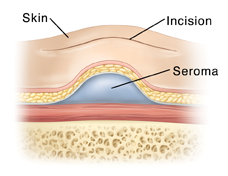
A seroma is a sterile collection of fluid under the skin, usually at the site of a surgical incision. Fluid builds up under the skin where tissue was removed. It may form soon after your surgery. Or it may form up to about 1 to 2 weeks after surgery. It may look like a swollen lump and feel tender or sore.
A small seroma isn't dangerous. Depending on its size and symptoms, it may not need to be treated. The seroma may go away on its own in a few weeks or months. Your body slowly absorbs the fluid. No medicine will make it go away faster. But if you have a large seroma or if it's causing pain, your health care provider may drain it. This is done with a syringe and needle. Or the provider may put in a drain. Seromas can return and may need to be drained multiple times. In some cases, it can become infected or turn into an abscess. In rare cases, you may need a minor procedure to remove the seroma. Long-term problems from a seroma are rare.
Home care
You may be given medicines to relieve pain. These may include acetaminophen and ibuprofen. Take these as directed. Check the seroma daily for the signs of infection listed below.
Follow-up care
Follow up with your health care provider as advised.
When to get medical care
Contact your health care provider right away if you have any of these:
-
Signs of infection:
-
Fever of 100.4°F (38°C) or higher, or as advised by your provider
-
Chills
-
Seroma or skin around it feels warm
-
Pain in the seroma that gets worse
-
Redness or swelling that gets worse
-
-
Drainage from the seroma that is white, colored, or bloody. Clear or slightly pink fluid leaking is normal.
-
Wound opens up.
-
Fast heart rate.
Call 911
Call
-
Shortness of breath
-
Trouble breathing
Online Medical Reviewer: Jonas DeMuro MD
Online Medical Reviewer: Raymond Turley Jr PA-C
Online Medical Reviewer: Tara Novick BSN MSN
Date Last Reviewed: 02/01/2025
© 2000-2026 The StayWell Company, LLC. All rights reserved. This information is not intended as a substitute for professional medical care. Always follow your healthcare professional's instructions.


Related Articles
Wound Care After Surgery: Pain
It's normal to feel pain at the incision site. The pain decreases as the wound heals. Pain that continues more than a few weeks after surgery or pain that gets worse any time after surgery can be a sign of a problem.
Gunshot Wound
Follow these guidelines to care for your gunshot wound at home.
Wound Check After Surgery, No Complication
If your wound was sewn closed, you shouldn't have to change the dressing more than twice a day in the first few days. Follow these home care instructions after your wound check.
After Endoscopic Sinus Surgery
Learn what to expect as you recover in the weeks after your endoscopic sinus surgery.