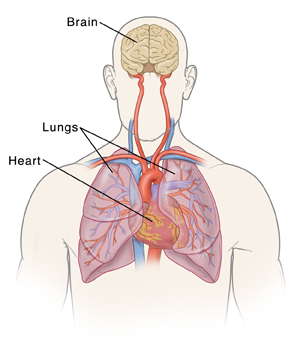
Altitude illness can occur when a person travels to higher altitudes than their body is used to. As altitude rises, there is less oxygen in the air. The body then gets less oxygen with each breath. This problem most often affects people who travel to 8,000 feet or higher. Acute mountain sickness (AMS) is the most common type of altitude illness.
You're more likely to have altitude illness if you:
-
Have had altitude illness before.
-
Exercise or drink alcohol without adjusting to altitude changes first.
-
Gain altitude quickly.
-
Have a medical problem that affects breathing.
Symptoms of AMS include:
-
Headache (often the main symptom).
-
Loss of appetite.
-
Nausea and vomiting.
-
Tiredness.
-
Dizziness.
-
Trouble sleeping.
Treating AMS
If you have symptoms of AMS:
-
Rest until you no longer have symptoms. Don't travel to higher altitudes until symptoms go away.
-
Don't drink alcohol or take sleeping pills or other sedatives.
-
You can take medicines for symptoms. For headache, taking an over-the-counter pain reliever, such as ibuprofen, acetaminophen, or aspirin, can help. Don't give aspirin to children younger than age 18. Medicine for nausea can also help.
-
If your symptoms don't get better within 24 to 48 hours, go back down to a lower altitude where you should feel better.
Preventing AMS
-
Make sure that you gain no more than 1,000 feet of elevation in a day when you travel. This gives your body more time to adjust to the change.
-
Sleep at a lower altitude than the highest altitude you traveled to during the day.
-
If you plan to keep moving up in altitude, stop and rest for 1 day at least every 2 to 3 days.
-
Watch for symptoms. If any symptoms come back, stop and rest right away. Or return to a lower altitude.
-
Ask your health care provider about a prescription medicine that may help prevent altitude sickness.
Follow-up care
Follow up with your health care provider or as advised.
When to get medical advice
If your symptoms don't get better within 24 to 48 hours or get worse, return to a lower altitude and seek help.
Call 911
Call 911 and go to a lower altitude right away if you have any of the following:
-
Confusion and irritability
-
Severe tiredness, sleepiness, or weakness
-
Acting drunk
-
Trouble with speech or vision
-
Trouble walking or talking
-
Loss of consciousness
-
Seizure
-
Trouble breathing
-
Coughing up pink or foamy spit
Online Medical Reviewer: Barry Zingman MD
Online Medical Reviewer: Louise Cunningham RN BSN
Online Medical Reviewer: Rita Sather RN
Date Last Reviewed: 01/01/2025
© 2000-2026 The StayWell Company, LLC. All rights reserved. This information is not intended as a substitute for professional medical care. Always follow your healthcare professional's instructions.

Related Articles
Dizziness (Uncertain Cause)
Dizziness is a common symptom. It may be described as lightheadedness, spinning, or feeling like you are going to faint. Dizziness can have many causes.
Hyperventilation Syndrome
This sheet can help you take care of yourself when you have hyperventilation syndrome.
When to Call for Help
Find detailed information on when to call for help in an emergency situation.
Shortness of Breath (Dyspnea)
The cause of shortness of breath is not always obvious, even after an exam. Watch out for new symptoms or changes in your current symptoms.