Restraints are used to keep patients safe when there is a risk for self-injury. This handout may help answer some of your questions. Talk with your doctor if you have other questions or concerns.
Why restraints are used
Some medicines or illnesses can cause confusion. A patient may not remember where they are or why they are there. Restraints help keep patients from harming themselves. Restraints can help prevent such things as:
-
Wandering out of a safe area.
-
Removing tubes or bandages.
-
Scratching at wounds or bandages.
-
Injuring themselves.
-
Injuring others.
How restraints are used
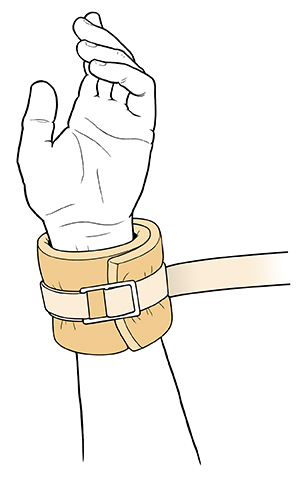
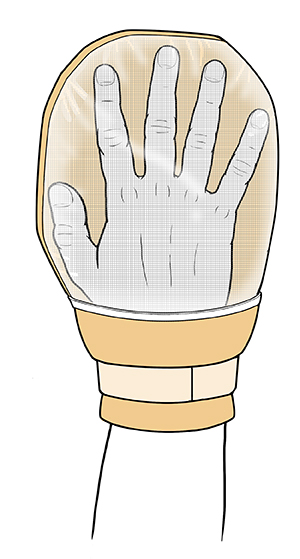
Many types of restraints are available. Each type has a purpose. Very strict guidelines say how a restraint can be used and for how long. Health care providers must:
-
Assess and document why the restraint is needed. They must follow current practices and guidelines.
-
Explain to the patient what is happening and why.
-
Use restraints only after all other methods have been tried. They must gather a team to apply the restraints.
-
Choose the restraint that limits movement the least.
-
Check the skin under the restraint often.
-
Keep a call button within the patient’s reach when a restraint is in place.
-
Remove the restraint as soon as it's no longer needed.
-
Preserve the patient’s dignity.
How you can help
-
Know that your loved one will be helped in doing everything they need. This includes eating, bathing, and using the toilet.
-
Don't hesitate to ask your loved one's care team about the restraints. Ask why they are used. Ask how long they will be needed.
-
Never remove restraints or loosen them yourself. Talk with your loved one's doctor if you have a concern.
Online Medical Reviewer: Amy Finke RN BSN
Online Medical Reviewer: L Renee Watson MSN RN
Online Medical Reviewer: Sravani Chintapalli Researcher
Date Last Reviewed: 05/01/2025
© 2000-2026 The StayWell Company, LLC. All rights reserved. This information is not intended as a substitute for professional medical care. Always follow your healthcare professional's instructions.

Related Articles
Understanding Your Medications & Procedures
Patients are often presented with a variety of treatments, medications and procedures that can be complicated and sometimes difficult to understand, both in terms of the expected result, but also in terms of possible side effects. One of the best ways to overcome this challenge is for patients to ask a lot of questions of their healthcare providers, so they can make the most-informed decisions for their own care. Patients can also play an important role in preventing infections while they are in the hospital.
Life Support
If you understand how specific treatments may affect your quality of life, you can decide which ones you’d choose or refuse. You may want to talk to your doctor about the possible benefits and risks of treatments.
Discharge Instructions: Limiting Fluids
Certain conditions can make it necessary to limit the amount of fluids you drink. This sheet can help you take in the right amount of fluid each day.
Maximizing Surgical Safety
Surgery is a complex process. There's a lot you can do as a patient to help your health care team keep you safe. This sheet suggests steps you can take before and after surgery to help you do your part.