Burr holes are small holes that a neurosurgeon makes in the skull. Burr holes are used to help relieve pressure on the brain when fluid, such as blood, builds up and starts to press on brain tissue. This buildup of blood is dangerous. As the blood builds, it pushes up against the skull and has nowhere to go. If the blood starts to compress the brain, it can lead to symptoms or even death if not treated.
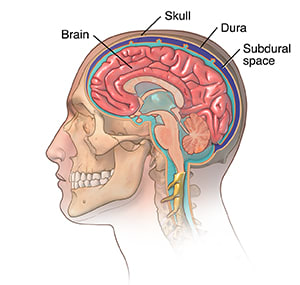
Layers around the brain
Your brain sits inside a bony skull. Inside your skull are several layers of tissue called the meninges. These layers cover and protect the brain. The layer just inside the skull is called the dura mater, or just dura. It's a tough, fibrous layer of tissue.
Why burr holes are used
One of the most common reasons burr holes are needed is for a subdural hematoma. This is when blood slowly builds between the brain and the dura after a mild head injury. The veins there are fragile and break easily. This is especially true for older adults and people taking blood thinners. This can lead to symptoms like headaches, confusion, seizures, and one-sided muscle weakness. If the blood continues to build, it may cause coma and brain damage.
There are other reasons why you might need a burr hole procedure. Neurosurgeons may do a burr hole procedure to relieve pressure around the brain because of:
- A sudden (acute) subdural hematoma.
- An ongoing (chronic) subdural hematoma.
- Certain kinds of brain cancer.
- The buildup of pus around the meninges.
- A buildup of cerebrospinal fluid (CSF) around the brain hygroma.
- Certain kinds of bleeds from the brain itself (rare).
A burr hole procedure may also be used for a brain biopsy or to drain a brain cyst.
How a burr hole procedure is done
You will be given medicine to make you relaxed or sleep. The surgery team will trim the hair on your scalp in the area of surgery. They will inject numbing medicine into your scalp. The surgeon will make a cut (incision) on your scalp. Using a special drill, the surgeon will drill 1 or 2 small holes in the skull to reach the dura. They then open the dura and drain any excess fluid or blood or take a biopsy. The surgeon may put a temporary drain in place to continue to drain fluid. Or they may close the dura and scalp right away.
Risks of a burr hole procedure
All surgery has risks. The risks of a burr hole procedure include:
- Bleeding.
- Infection.
- Blood clots.
- Brain injury.
- Heart attack or stroke.
- Problems with anesthesia.
- No relief from symptoms and need for other surgery such as a craniotomy.
Your own risks may vary according to your age, your general health, and the reason for your procedure. Talk with your doctor to find out what risks may apply to you.
Online Medical Reviewer: Anne Fetterman RN BSN
Online Medical Reviewer: Luc Jasmin MD
Online Medical Reviewer: Raymond Kent Turley BSN MSN RN
Date Last Reviewed: 12/01/2022
© 2000-2026 The StayWell Company, LLC. All rights reserved. This information is not intended as a substitute for professional medical care. Always follow your healthcare professional's instructions.

Related Articles
Having a Burr Hole Procedure
Burr holes are small holes that a neurosurgeon makes in the skull. Burr holes are used to help relieve pressure on the brain when fluid, such as blood, builds up and starts to press on brain tissue.
Burr Holes
Burr holes are small holes that a neurosurgeon makes in the skull to help relieve pressure on the brain. Read on to learn more about this procedure.
The Day of Your Craniotomy
Learn what to expect the day of your surgery.
Preparing for a Craniotomy
As your surgery nears, you may wonder about your future health care needs. You may also have questions about how to prepare for your craniotomy. This information can help.